What ESP stocks
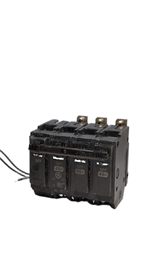
- Q-Line plug-in — THQL and TQL series, including GFCI and arc-fault units
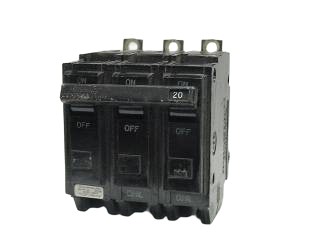
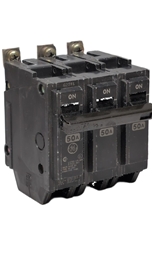
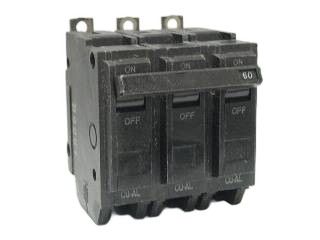
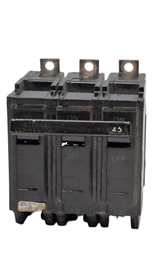
- Q-Line bolt-on — THQB, THQC and TQD series, the largest group in this category
- Q-Line tandem — THQP half-size units, two circuits in one pole space
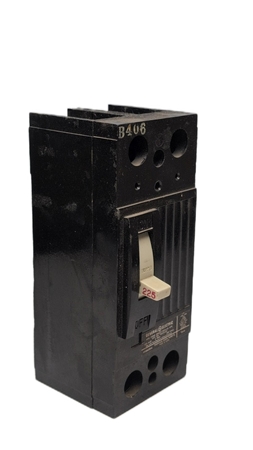
- E-frame molded case — TE, TEB, TED, TEF, TEY, THED and THEF
- F-frame molded case — TF and TFJ
- J and K frames — TJ, TJJ, TJK and THJK, and TKM and TKMA units to 1,200 amperes
- Mag-Break motor circuit protectors — TEC series
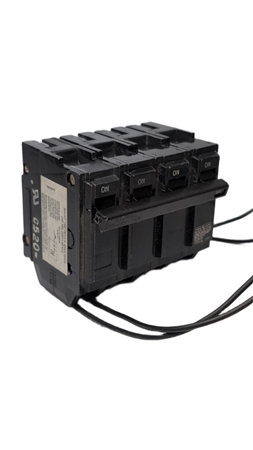
Three-pole units are the largest group, followed by two pole and single pole. Four GFCI units, one arc-fault unit and six shunt-trip units are in current inventory.
Every breaker is inspected, cleaned and tested to ESP Product Standards before it ships, and carries a one-year operational guarantee. Reconditioned units are tested for continuity, insulation resistance and mechanical operation; surplus new units are verified against their catalog number and inspected for shelf damage.
Common questions
What is the difference between THQL and THQB?
Mounting. THQL breakers plug onto the panel bus and are held by spring tension; THQB breakers bolt to it. Electrical characteristics are comparable at the same rating, and both are Q-Line. THQB is used in bolt-on panelboards where vibration or available fault current makes a bolted connection necessary. The two are not substitutes for one another — the panel determines which it accepts, and this is the most common GE ordering error.
Are GE breakers still made?
Current lines are, under different ownership. ABB acquired GE Industrial Solutions on 30 June 2018 along with a long-term right to use the GE brand, so Q-Line breakers are still produced and still carry GE markings. What has gone out of production is the older molded case material — much of the E, F, J and K frame inventory on this page is no longer made in any branding, and panels built around those frames remain in service. That is the part of GE stock where surplus and reclaimed inventory is the only practical source.
What does THQP mean, and can I use half-size breakers?
THQP denotes a tandem, or half-size, breaker: two single-pole circuits in the space of one standard pole. Whether a panel accepts them is not a matter of physical fit — the panel schedule states the maximum number of circuits the enclosure is rated for, and which positions will accept a tandem. Some positions in a given panel accept them and others do not. Exceeding the rated circuit count is a code violation even when the breakers seat correctly.
Some listings say "circuit breaker frame" — what does that mean?
A frame is the breaker body without a trip unit installed. On the larger J and K frame units, the trip unit is a separate rated component, so the frame determines the physical size and interrupting capacity while the trip unit sets the ampere rating. A frame is not a usable breaker on its own. Four units in current inventory are frames, and each says so in its listing; if you need a complete breaker at a specific rating, check the listing rather than the frame size.