What ESP stocks
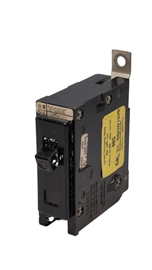
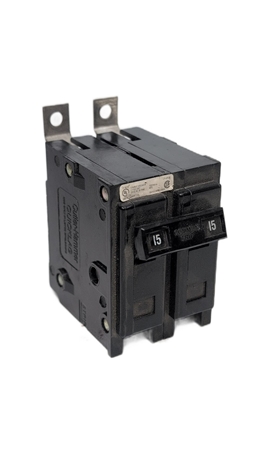
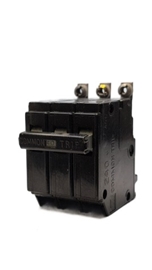
- Type BR — BR series plug-on residential breakers
- Type CH — CH and CHB plug-on, the heavier of the two residential lines
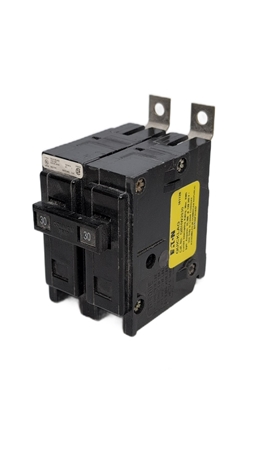
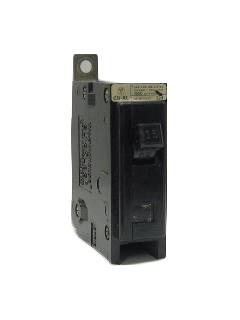
- Bolt-on load center — BAB and QC series, the largest group in this category
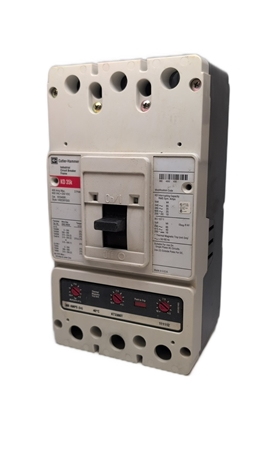
- E-frame molded case — EB, EH, EHB, EHC, EHD and GHB
- F-frame molded case — FD, FDB, FS and HFD
- K and N frames — KA and KS, and N-frame units to 1,200 amperes
- Motor circuit protectors — MCP and HMCP series
Three-pole units are the largest group, followed by two pole and single pole. Four arc-fault units and one shunt-trip unit are in current inventory.
Every breaker is inspected, cleaned and tested to ESP Product Standards before it ships, and carries a one-year operational guarantee. Reconditioned units are tested for continuity, insulation resistance and mechanical operation; surplus new units are verified against their catalog number and inspected for shelf damage.
Common questions
Are Westinghouse and Cutler Hammer breakers the same?
They share a lineage, which is why the catalog numbers often look related. Eaton acquired Cutler-Hammer in 1978, then bought Westinghouse's Distribution and Control business in February 1994 and merged it into the Cutler-Hammer unit. Product lines from both companies were consolidated, and in 2003 the unit was renamed Eaton Electrical. That history is real, but it does not make any two breakers interchangeable. Compatibility is determined by the panel, not by corporate ownership — the panel label states which types it was tested with, and that label governs. ESP lists Westinghouse breakers separately because buyers search for them by the brand stamped on the part in front of them.
What is the difference between Type BR and Type CH?
They are two separate residential lines with different bus connections, and they are not substitutes for one another. Type CH is the heavier-duty line; Type BR is the lighter line, and carries the Bryant and Westinghouse heritage that came into Eaton in 1994. A BR breaker will not seat correctly in a CH load center even where it appears to fit, and the reverse is also true. The panel label states which line it accepts, and that is the only reliable way to tell.
Why are some of these breakers branded Eaton?
Because the Cutler-Hammer name was retired on newer production. The Cutler-Hammer unit became Eaton Electrical in 2003, and breakers made after that carry Eaton branding while using the same catalog numbering. Both brandings appear in current inventory and are listed together here, since the catalog number — not the name on the handle — is what identifies the part.
Can a motor circuit protector replace a circuit breaker?
No. A motor circuit protector in the MCP and HMCP series is magnetic-only: it provides instantaneous short-circuit protection but has no thermal element, so it does not protect against sustained overload. It is listed for use only as part of a combination motor controller, where a separate overload relay provides that protection. An MCP installed as a branch-circuit breaker leaves the circuit without overload protection. If a panel schedule calls for a circuit breaker, a motor circuit protector is not an equivalent.